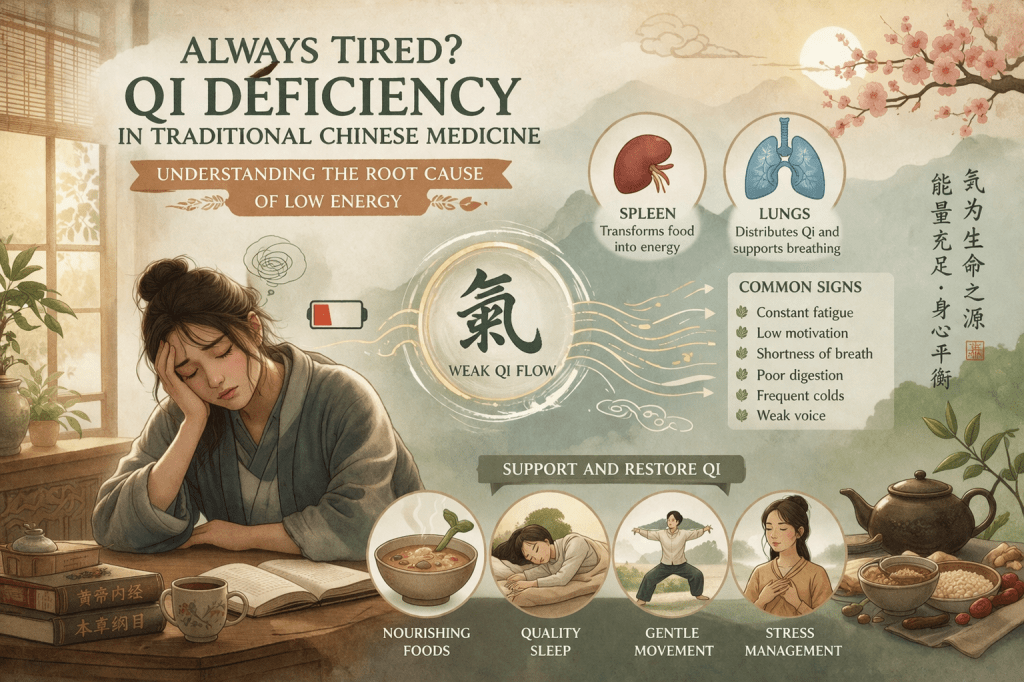
Always Tired? It May Be Qi Deficiency According to Traditional Chinese Medicine
Many people today feel constantly tired. Even after a full night of sleep, they may still wake up without energy. In Traditional Chinese Medicine (TCM), this persistent fatigue is often connected to a condition known as Qi Deficiency.
Qi is the vital energy that powers every function in the body. When Qi becomes weak or depleted, the body may struggle to maintain energy, digestion, and mental clarity. Understanding this concept can help explain why fatigue is so common in modern life.
What Is Qi in Traditional Chinese Medicine?
In TCM, Qi is the fundamental life force that circulates through the body along specific pathways called meridians. It supports physical movement, organ function, immunity, and mental vitality.
When Qi flows smoothly and is sufficiently strong, the body feels balanced and energetic. However, when Qi becomes deficient, many functions begin to slow down.
Common symptoms of Qi Deficiency include:
- constant fatigue
- low motivation or lack of energy
- shortness of breath
- weak voice
- frequent colds
- poor digestion
- difficulty concentrating
These symptoms may appear gradually, often becoming more noticeable during periods of stress or seasonal changes.
Why Qi Deficiency Is Common After Winter
Many people experience increased fatigue at the end of winter. According to TCM, winter is a season of conservation and inward energy. During colder months, the body tends to slow down and store energy.
However, modern lifestyles often disrupt this natural rhythm. Lack of sunlight, reduced physical activity, heavier foods, and increased stress may weaken Qi over time.
When spring arrives, the body naturally wants to become more active again. If Qi reserves are low, people may feel exhausted instead of energized.
The Organs Most Affected by Qi Deficiency
Several organ systems in TCM can develop Qi deficiency, but two are particularly important.
Spleen Qi Deficiency
The Spleen in TCM is responsible for transforming food into usable energy. When Spleen Qi becomes weak, digestion may become inefficient, leading to fatigue and heaviness in the body.
People with Spleen Qi deficiency may also experience bloating, poor appetite, or a tendency toward loose stools.
Lung Qi Deficiency
The Lungs govern breathing and help distribute Qi throughout the body. Weak Lung Qi may lead to shortness of breath, low stamina, and frequent respiratory infections.
When both Spleen and Lung Qi are weak, overall energy levels can decline significantly.
Signs Your Fatigue May Be Qi Deficiency
While tiredness can have many causes, certain patterns are commonly associated with Qi deficiency in TCM:
- feeling tired even after sleeping
- fatigue that worsens after physical or mental effort
- low energy after eating
- a preference for warm foods and drinks
- difficulty staying focused
These signs suggest that the body’s energy production and circulation may be weakened.
How to Support Qi Naturally
Traditional Chinese Medicine focuses on restoring balance through lifestyle, diet, and gentle therapeutic methods.
Eat Nourishing Foods
Warm, cooked foods are often recommended to support Qi. Examples include soups, stews, whole grains, root vegetables, and lightly cooked greens.
Improve Sleep Quality
Regular sleep patterns allow the body to restore energy. Going to bed earlier and maintaining consistent sleep times can support Qi recovery.
Gentle Movement
Practices such as Qi Gong, Tai Chi, or walking help stimulate the circulation of Qi without exhausting the body.
Manage Stress
Chronic stress can disrupt the natural flow of Qi and contribute to fatigue. Relaxation practices, meditation, and breathing exercises may help restore balance.
Understanding Fatigue Through the Lens of TCM
In Western medicine, fatigue is often treated as a symptom without a clear explanation. Traditional Chinese Medicine offers a broader perspective by looking at the body’s overall energy balance.
By understanding Qi and how it supports the body’s systems, we can better recognize the underlying patterns that contribute to persistent tiredness.
Supporting Qi through proper rest, nourishing food, and balanced lifestyle habits may gradually help restore energy and vitality.
 TCM QiDao
Leave a comment