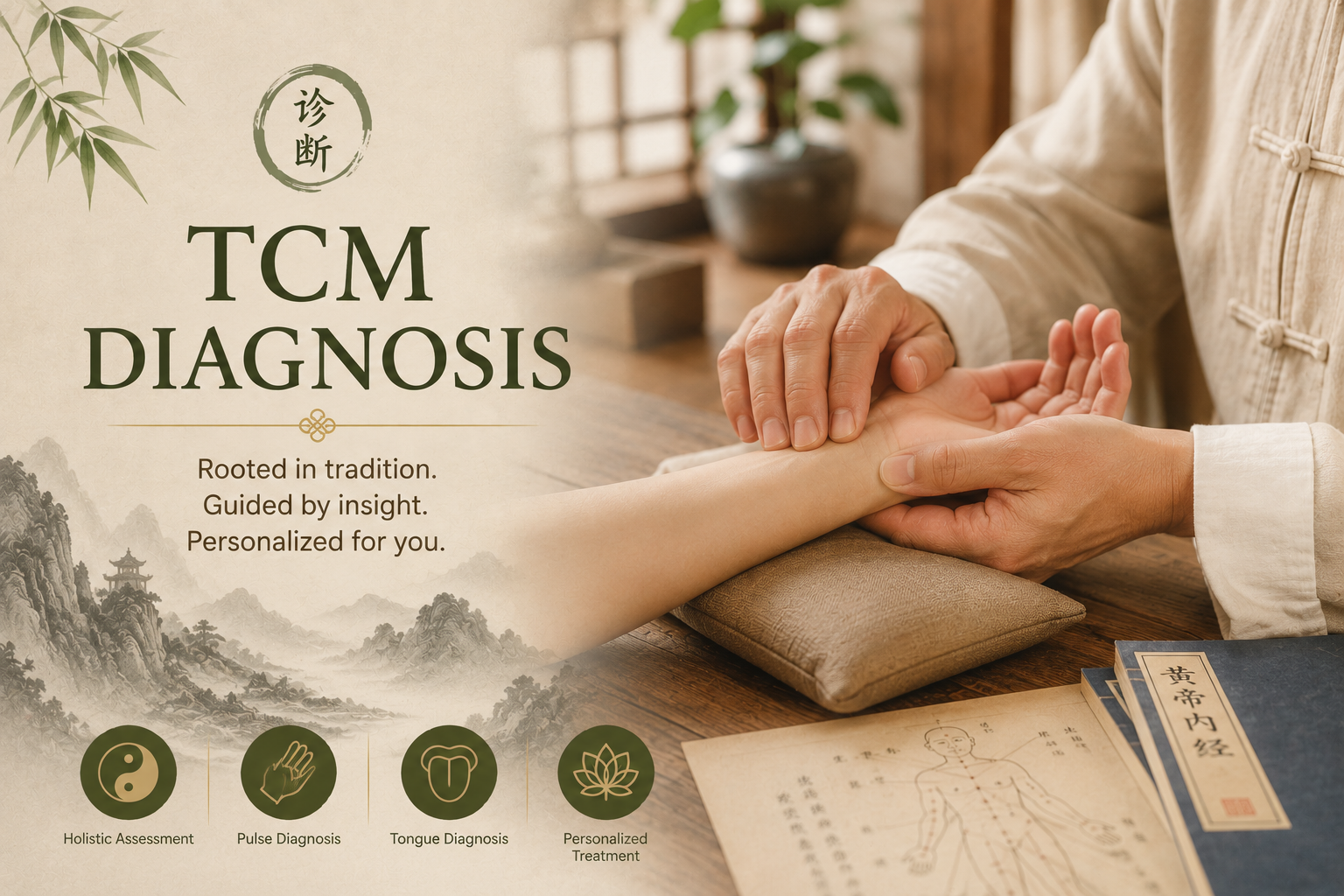
TCM Diagnosis
Diagnosis in Traditional Chinese Medicine focuses on identifying patterns of imbalance within the body rather than assigning a single disease label. TCM practitioners observe physical, emotional, and energetic signs to understand how the body’s systems are functioning as a whole.
This section explores the diagnostic methods and pattern analysis used in Traditional Chinese Medicine.
Understanding TCM Diagnosis
Traditional Chinese Medicine uses a holistic approach to assessment. Instead of looking only at isolated symptoms, practitioners evaluate the entire condition of the patient, including lifestyle, emotions, digestion, sleep, energy levels, and circulation.
The goal of TCM diagnosis is to determine:
- Which energetic patterns are present
- Whether imbalance involves deficiency or excess
- The relationship between Yin and Yang
- The condition of Qi, Blood, and Body Fluids
- Which organ systems and meridians are affected
Main Diagnostic Methods
Tongue Diagnosis
The tongue is considered a map of the internal body in TCM. Its color, coating, shape, and moisture may provide insight into energetic imbalances and organ function.
Pulse Diagnosis
TCM practitioners assess the pulse at multiple positions and depths to evaluate the condition of internal systems and energy circulation.
Symptom Pattern Analysis
Symptoms are interpreted as part of broader energetic patterns rather than isolated problems. For example, fatigue may relate to Qi deficiency, Blood deficiency, or other internal imbalances.
Observation and Inquiry
Traditional diagnosis also includes observing posture, complexion, voice, breathing, emotional state, and asking detailed questions about lifestyle and overall wellbeing.
Common TCM Diagnostic Patterns
This section will gradually expand with educational guides related to patterns such as:
- Qi Deficiency
- Blood Deficiency
- Yin Deficiency
- Yang Deficiency
- Dampness
- Phlegm Accumulation
- Heat Patterns
- Cold Patterns
- Liver Qi Stagnation
Understanding these patterns helps explain how symptoms may be connected from a Traditional Chinese Medicine perspective.
What You Will Find in This Section
As the portal grows, this category will include articles about:
- Beginner guides to TCM diagnosis
- Tongue diagnosis interpretation
- Pulse diagnosis basics
- Organ pattern differentiation
- Eight Principles diagnosis
- Qi, Blood, and Fluid imbalances
- Emotional and energetic patterns
- Educational symptom analysis
Important Note
The information provided in this section is intended for educational purposes only and should not replace professional medical advice, diagnosis, or treatment.
Traditional Chinese Medicine diagnosis is a complex system that requires proper training and clinical experience.
Learn How TCM Understands the Human Body
TCM diagnosis offers a unique way of understanding health by focusing on patterns, balance, and interconnected systems. This section will help you explore the principles practitioners use to interpret symptoms and restore harmony within the body.

