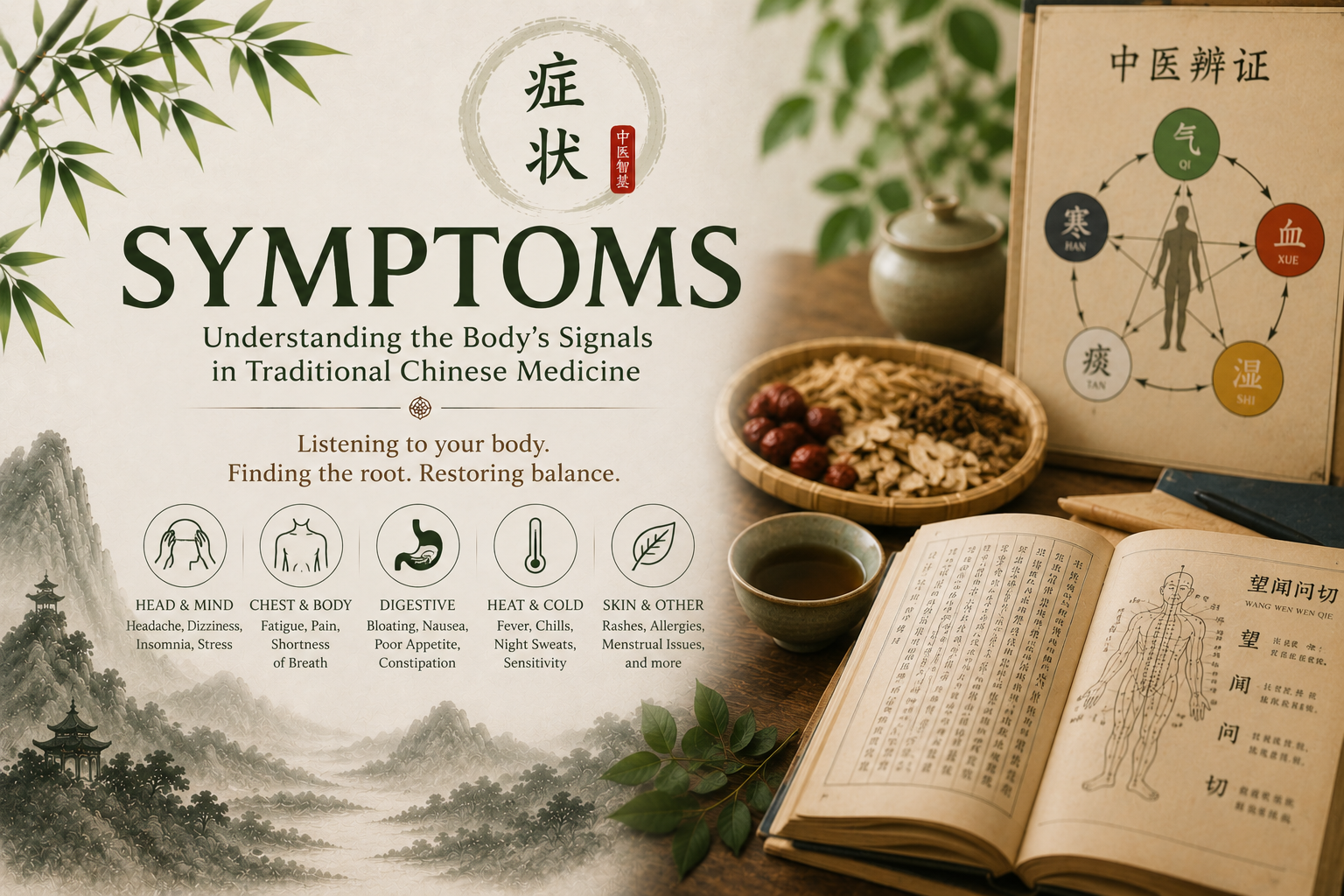
Symptoms in Traditional Chinese Medicine
In Traditional Chinese Medicine, symptoms are viewed as signals of deeper internal imbalances rather than isolated problems. TCM focuses on understanding the root pattern behind physical and emotional symptoms to restore harmony within the body.
This section explores common symptoms from a Traditional Chinese Medicine perspective and explains how they may relate to Qi, Yin-Yang balance, organ systems, and energetic patterns.
Understanding Symptoms in TCM
Unlike conventional medicine, which often focuses on diagnosing diseases directly, TCM looks at how groups of symptoms form larger patterns of imbalance.
For example:
- Fatigue may relate to Qi deficiency
- Insomnia may involve Heart or Liver imbalance
- Digestive issues may reflect Spleen weakness
- Headaches may be connected to Liver Yang Rising or Qi stagnation
Two people with the same symptom may receive completely different TCM interpretations depending on their overall pattern.
Common Symptoms Covered
As the portal expands, this section will include educational guides related to symptoms such as:
- Fatigue and low energy
- Stress and anxiety
- Insomnia and sleep problems
- Digestive discomfort
- Headaches and migraines
- Brain fog
- Cold hands and feet
- Bloating and dampness
- Menstrual imbalance
- Low appetite
- Emotional tension
- Chronic pain
Each article will explore possible TCM patterns associated with the symptom and explain relevant concepts used in Traditional Chinese Medicine.
How TCM Interprets Symptoms
Traditional Chinese Medicine evaluates symptoms through several key principles:
Qi and Energy Flow
Many symptoms are linked to disrupted or weakened Qi circulation within the body.
Yin and Yang Balance
Excess heat, coldness, dryness, or deficiency patterns are often interpreted through the relationship between Yin and Yang.
Organ System Relationships
TCM organ systems function differently from Western anatomical definitions and are closely connected to emotions, digestion, circulation, and energy regulation.
Pattern Differentiation
Symptoms are analyzed as part of broader energetic patterns rather than treated individually.
Educational Purpose
The content in this section is intended for educational and informational purposes only. It should not be considered medical advice or a substitute for professional healthcare.
Traditional Chinese Medicine diagnosis requires proper clinical assessment and individualized evaluation.
What You Will Find Here
This section will gradually grow into a symptom-based educational library covering:
- TCM explanations of common symptoms
- Pattern differentiation guides
- Related organ imbalances
- Lifestyle and diet principles
- Acupressure and wellness support techniques
- Foundational TCM theory connected to symptoms
Explore Symptoms Through the Lens of TCM
Traditional Chinese Medicine offers a holistic way of understanding the body by looking beyond isolated symptoms and focusing on overall balance and harmony. This section is designed to help you explore how TCM interprets common health concerns and energetic patterns.

