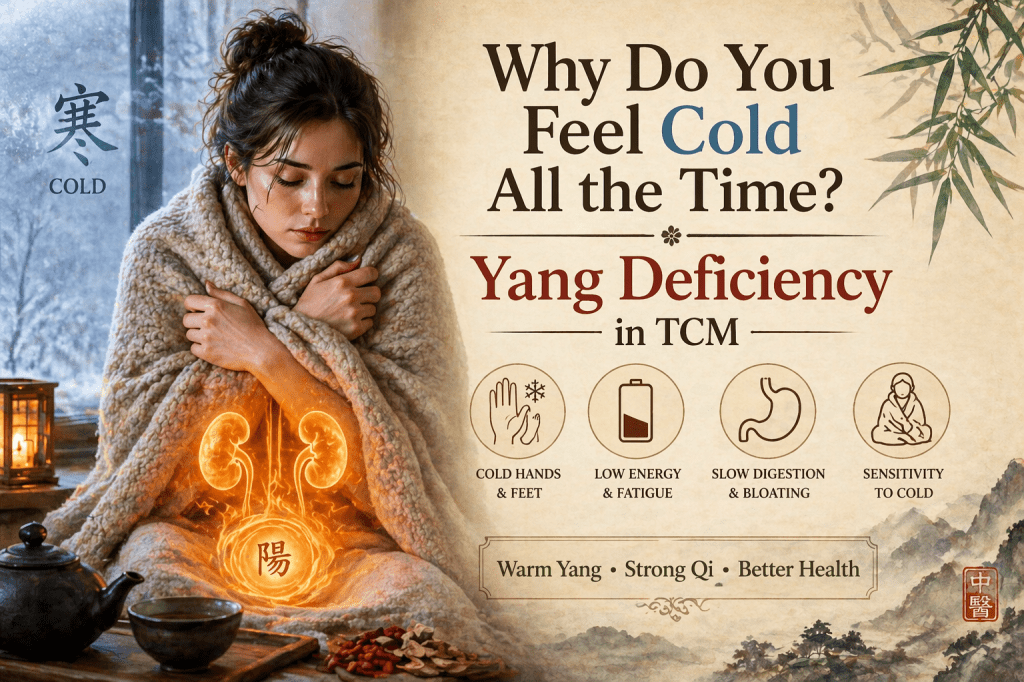
Why Do I Feel Cold All the Time? Yang Deficiency in Traditional Chinese Medicine
Some people seem to feel cold much more easily than others. Even when the room temperature is comfortable, they may still experience cold hands, cold feet, or a general feeling of chilliness.
In Traditional Chinese Medicine (TCM), this condition is often associated with a pattern known as Yang Deficiency. Yang represents warmth, activity, and energy in the body. When Yang energy becomes weak, the body may struggle to generate enough internal warmth.
Understanding Yin and Yang in the Body
Traditional Chinese Medicine describes the body as a dynamic balance between two complementary forces: Yin and Yang.
- Yin represents cooling, nourishing, and calming aspects of the body.
- Yang represents warmth, movement, and metabolic activity.
When Yang energy is strong, the body feels warm, active, and energized. However, when Yang becomes deficient, symptoms related to coldness and low energy may appear.
Common Signs of Yang Deficiency
People with Yang deficiency often experience several characteristic symptoms:
- cold hands and feet
- feeling cold even in warm environments
- low energy and fatigue
- frequent urination
- loose stools or slow digestion
- pale complexion
These symptoms occur because Yang energy is responsible for warming the body and supporting many metabolic processes.
Kidney Yang and Body Warmth
In TCM theory, the Kidneys play a particularly important role in maintaining the body’s Yang energy.
Kidney Yang is often described as the body’s internal “fire.” It helps regulate body temperature, supports metabolism, and provides the energy needed for many physiological functions.
When Kidney Yang becomes weak, the body’s ability to generate warmth decreases, which may lead to persistent feelings of cold.
If You want to read more about the importance of Kidneys You can do it here:
https://tcm-qidao.com/2025/05/27/the-powerhouse-within-understanding-the-role-of-the-kidneys-in-traditional-chinese-medicine/
Other Organ Systems Involved
Although the Kidneys are central to Yang energy, other organs may also influence how warm or cold the body feels.
The Spleen, for example, helps transform food into energy. If this process becomes weak, the body may not produce enough Qi and warmth.
If You want to read more about how Spleen works You can do it here:
Understanding how different organs interact is an important part of Traditional Chinese Medicine. If you would like to explore this further, you may find our article helpful:
How Lifestyle Affects Yang Energy
Several lifestyle factors can gradually weaken Yang energy over time.
- chronic stress
- lack of sleep
- excessive consumption of cold foods and drinks
- overwork and exhaustion
Emotional tension may also disrupt the smooth movement of Qi in the body. In Traditional Chinese Medicine, emotional states such as anger can affect organ balance and energy circulation.
You can learn more about this connection in our article:
Ways to Support Yang Energy
Traditional Chinese Medicine focuses on restoring balance through gentle and natural methods.
Eat Warm, Nourishing Foods
Warm soups, stews, cooked vegetables, and whole grains are often recommended to support digestive energy and internal warmth.
Stay Physically Active
Moderate movement helps stimulate circulation and supports the flow of Qi throughout the body.
Protect the Body from Cold
Keeping the lower back, feet, and abdomen warm is often emphasized in TCM, as these areas are closely connected to Kidney energy.
Reduce Chronic Stress
Practices such as meditation, breathing exercises, Qi Gong, or acupuncture may help restore balance and support the body’s natural energy.
More about breathing excercises:
https://tcm-qidao.com/2025/05/21/the-art-of-breathing-a-key-to-balance-and-well-being/
Listening to the Body
Feeling cold all the time may seem like a minor inconvenience, but in Traditional Chinese Medicine it can be a signal that the body’s internal energy needs support.
By paying attention to these signals and maintaining balance between Yin and Yang, it is possible to support the body’s natural warmth, vitality, and resilience.
Key Takeaways
- Feeling cold all the time may be a sign of Yang Deficiency in Traditional Chinese Medicine.
- Yang energy is responsible for warming the body and supporting metabolism and physical activity.
- Common symptoms include cold hands and feet, fatigue, low energy, slow digestion, and sensitivity to cold.
- In TCM theory, Kidney Yang acts as the body’s internal source of warmth and plays a key role in maintaining energy balance.
- Lifestyle factors such as chronic stress, lack of sleep, excessive cold foods, and overwork may weaken Yang energy over time.
- Supporting Yang energy through warm foods, regular movement, proper rest, and protecting the body from cold may help restore balance and vitality.


Leave a comment