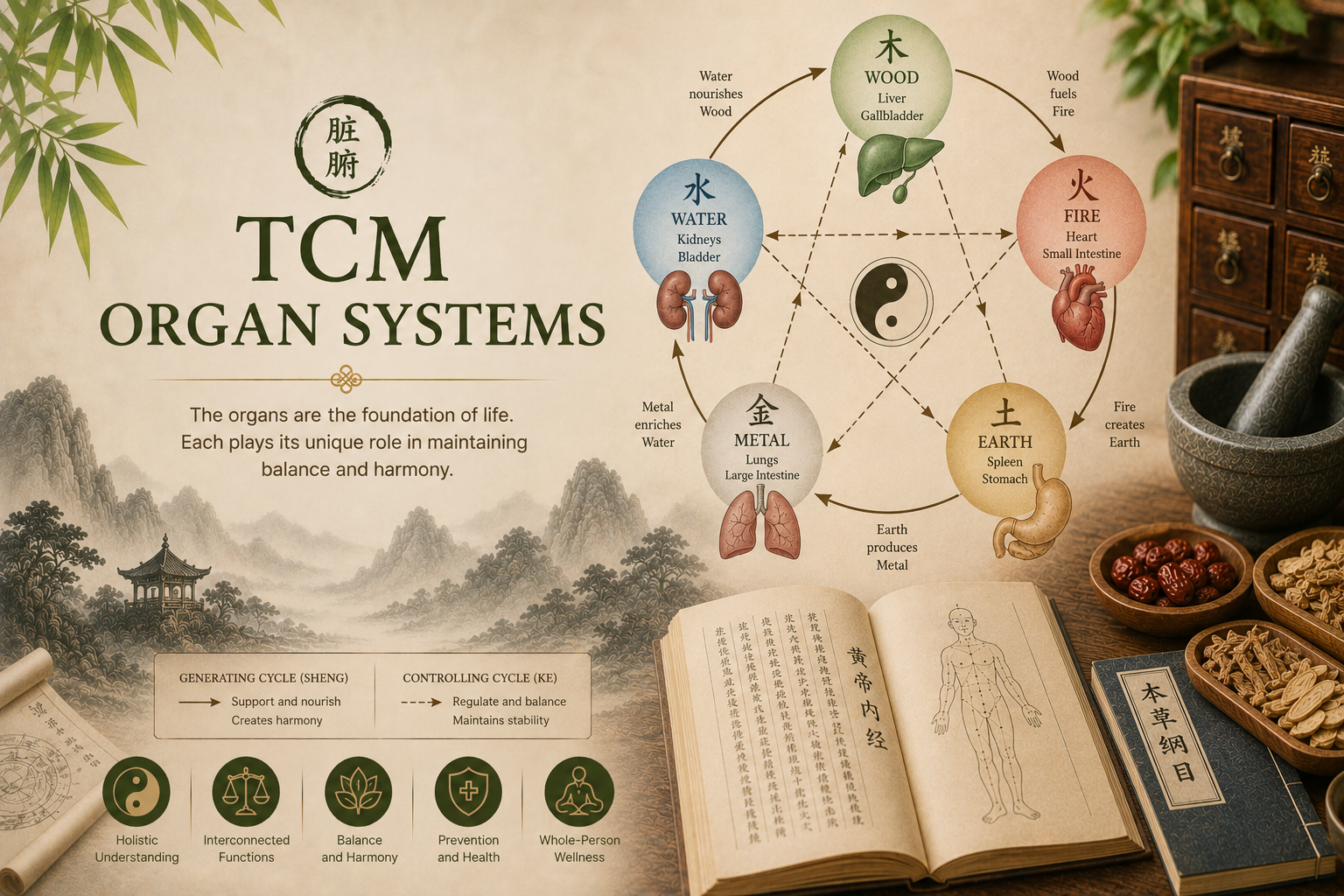
TCM Organ Systems
In Traditional Chinese Medicine, the organ systems are understood as more than physical organs.
They represent functional networks that include energy, emotions, digestion, circulation, breathing,
fluid balance, reproduction, sleep, and the way the body adapts to seasonal and environmental change.
This page is a starting hub for exploring the main organ systems in TCM. Use it as a guide to understand
how different organs are connected with symptoms, emotions, meridians, diet, lifestyle, and patterns of imbalance.
Main Organ Systems in Traditional Chinese Medicine
Each organ system below links to articles already available on TCM QiDao. As the portal grows, this page will become
a central map for learning how the internal systems work together in Traditional Chinese Medicine.
Liver System
The Liver system in TCM is closely connected with the smooth flow of Qi, emotional balance, stress,
anger, planning, and the seasonal energy of spring. Liver imbalance is often discussed in relation to
stagnation, tension, irritability, headaches, PMS, and emotional pressure.
Related Articles
Heart System
In TCM, the Heart is associated not only with circulation, but also with the Shen, emotional wellbeing,
sleep, calmness, mental clarity, and inner balance. Heart-related topics often overlap with anxiety,
insomnia, stress, and emotional health.
Related Articles
Spleen and Stomach System
The Spleen and Stomach are central to digestion, transformation of food, energy production, nourishment,
and the creation of Qi and Blood in TCM theory. This system is often connected with fatigue, bloating,
weak digestion, dampness, and low energy.
Related Articles
- The Spleen in Traditional Chinese Medicine: A Vital Organ for Overall Health
- The Stomach in Traditional Chinese Medicine: A Vital Organ for Digestion and Health
- Digestive Issues and Acupuncture: Finding Relief
- Why Am I Always Tired? Qi Deficiency in Traditional Chinese Medicine
- Best Foods to Boost Energy According to Traditional Chinese Medicine
Lung System
The Lung system is related to breathing, Qi circulation, the skin, immunity, grief, and the body’s connection
with the external environment. In TCM, the Lungs play an important role in respiration and protective energy.
Related Articles
Kidney System
The Kidney system in TCM is associated with deep vitality, Essence, growth, reproduction, bones, aging,
willpower, and the balance of Yin and Yang. Kidney patterns are often discussed in relation to coldness,
fatigue, reproductive health, lower back weakness, and long-term constitutional strength.
Related Articles
Gallbladder System
In TCM, the Gallbladder is connected with decision-making, courage, judgment, digestion of fats,
and its close relationship with the Liver system. It is often discussed together with Liver Qi flow
and emotional clarity.
Related Article
Bladder System
The Bladder system is traditionally connected with fluid metabolism, elimination, the back, the nervous system,
and its close relationship with the Kidneys. In TCM, it is also part of the Water element system.
Related Article
Small Intestine System
The Small Intestine is associated with separating the pure from the impure, both physically and symbolically.
In TCM, it is linked with digestion, absorption, clarity, and its relationship with the Heart system.
Related Article
Large Intestine System
The Large Intestine is connected with elimination, letting go, bowel function, and its relationship with the Lung system.
In TCM theory, this system can be discussed in relation to digestion, dryness, constipation, and emotional release.
Related Article
How the Organ Systems Work Together
TCM organ systems are not isolated. They form relationships through the Five Elements, Yin and Yang,
Qi and Blood, meridians, emotions, seasonal cycles, and patterns of imbalance. For example, the Liver may influence
digestion through its relationship with the Spleen and Stomach, while the Kidneys may support long-term vitality
and reproductive health.
As this portal grows, each organ system will receive deeper guides, related symptom pages, diet therapy articles,
and acupressure resources.
Continue Learning
To understand the organ systems more deeply, continue with these related knowledge hubs:
Educational Note
This content is for educational purposes only and is not medical advice, diagnosis, or treatment.
Traditional Chinese Medicine offers a holistic framework for understanding health, but it should not replace
professional medical care.
If you have serious, persistent, worsening, or unexplained symptoms, consult a qualified healthcare professional.

