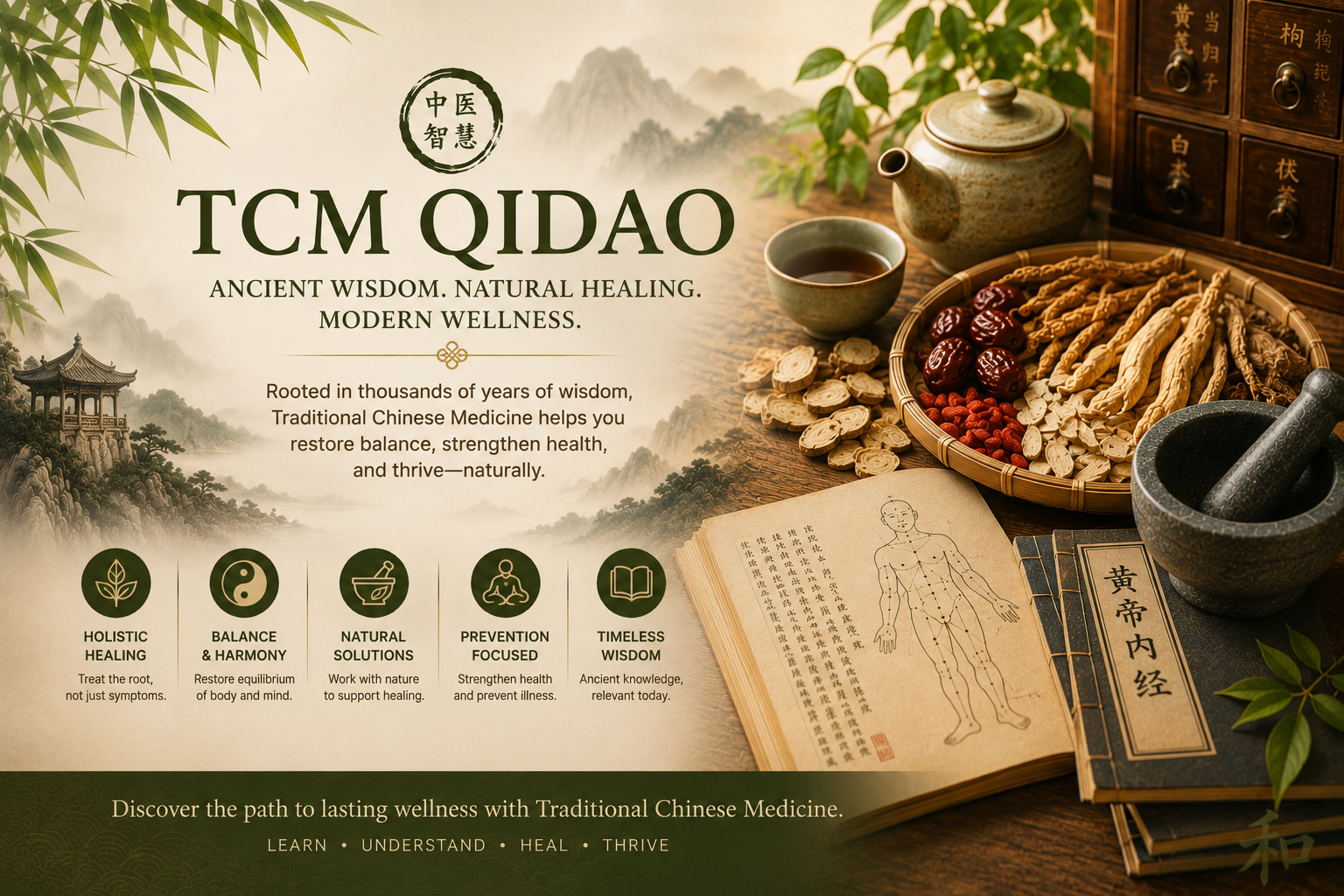
Traditional Chinese Medicine Knowledge Portal
Welcome to TCM QiDao — an educational knowledge portal dedicated to Traditional Chinese Medicine, holistic self-care, diagnosis, diet therapy, organ systems, herbal medicine, acupressure, and the philosophy of balance.
This portal is designed to help beginners and curious readers explore Traditional Chinese Medicine step by step.
Start with the foundations, then continue into diagnosis, symptoms, organ systems, food therapy, herbs, and acupressure.
Main Knowledge Hubs
Use the sections below as your main map through the portal.
TCM Fundamentals
Learn the core ideas of Traditional Chinese Medicine, including Qi, Yin and Yang, Five Elements, meridians, balance, and the basic philosophy behind TCM.
Diagnosis in TCM
Explore how TCM looks at patterns of imbalance through tongue diagnosis, pulse diagnosis, symptoms, constitution, and overall energetic patterns.
TCM Organ Systems
Understand the role of the Liver, Heart, Spleen, Stomach, Lungs, Kidneys, Gallbladder, Bladder, Small Intestine, and Large Intestine in Traditional Chinese Medicine.
Symptoms and Conditions
Learn how common symptoms such as fatigue, stress, anxiety, poor sleep, digestive issues, coldness, headaches, and emotional tension may be understood from a TCM perspective.
Diet Therapy
Discover the principles of Chinese dietary therapy, warming and cooling foods, seasonal eating, foods for Qi, Spleen support, dampness, and energy.
Herbal Medicine
Learn about Chinese herbs, traditional herbal concepts, common herbs, herbal formulas, and important safety notes.
Acupressure
Explore acupressure points, meridians, self-care routines, and practical techniques inspired by Traditional Chinese Medicine.
Start Here If You Are New to TCM
If this is your first time learning about Traditional Chinese Medicine, begin with the Start Here page.
It gives you a simple learning path through the most important ideas: Qi, Yin and Yang, Five Elements, meridians, diagnosis, diet therapy, organ systems, and acupressure.
Featured Beginner Guides
These guides are useful starting points for understanding the core structure of Traditional Chinese Medicine.
Explore TCM Organ Systems
In Traditional Chinese Medicine, organ systems are more than physical organs. They describe functional networks connected with emotions, energy, digestion, breathing, sleep, reproduction, fluids, and seasonal balance.
Popular Topics
These topics are good entry points if you are looking for practical explanations of common symptoms and patterns.
Learn Through Connected Topics
TCM QiDao is organized as a knowledge portal, not just a blog. Articles are connected through topic clusters,
organ systems, symptoms, diagnosis, food therapy, herbs, and acupressure. This helps you move from basic concepts
to deeper explanations step by step.
For example, you might start with TCM Fundamentals,
continue to Organ Systems, then explore a specific topic like
Liver Qi Stagnation
or Tongue Diagnosis.
Latest Educational Articles
New articles are regularly added to expand the portal. Use the main hubs above for structured learning, and the latest articles for newly published guides.
You can also browse recent articles through the blog archive if you prefer chronological reading.
About TCM QiDao
TCM QiDao is an educational portal created to make Traditional Chinese Medicine easier to understand for beginners.
The goal is to explain classical TCM ideas in a clear, structured, and practical way while keeping a responsible educational tone.
Topics include Qi, Yin and Yang, Five Elements, meridians, organ systems, diagnosis, symptoms, diet therapy, herbal medicine, acupuncture, and acupressure.
Educational Note
The information on this website is for educational purposes only. It is not medical advice, diagnosis, or treatment. Traditional Chinese Medicine can offer a holistic framework for understanding health, but it should not replace professional medical care.
If you have serious, persistent, worsening, or unexplained symptoms, consult a qualified healthcare professional.
Do not stop or change prescribed treatment without medical guidance.

